
If you’ve ever walked into your child’s room and felt like you accidentally stepped into a toy store that exploded, you’re not alone. Piles of plastic, overflowing bins, and toys that were must-haves last week but now sit untouched — it’s the endless cycle of kid clutter.
But here’s the secret: kids don’t need all their toys out at once. In fact, having fewer toys available actually encourages deeper play, sparks creativity, and reduces overwhelm. That’s where toy rotation comes in.
This simple system — storing away some toys and bringing them back later — works like magic. It makes old toys feel brand-new, saves money, and helps kids play more peacefully. Let’s unpack (pun intended) how to set up a toy rotation system that works for children ages 3–8, and for you, too.
Why Toy Rotation Works
Before we jump into the hacks, let’s talk about why it’s worth trying:
- Less overwhelm: Too many options can paralyze kids. With fewer toys, they play longer and with more focus.
- More creativity: When they’re not distracted by endless choices, kids invent new ways to use what’s available.
- Renewed interest: When a stored toy comes back weeks later, it feels exciting and fresh again.
- Calmer spaces: Fewer toys out means less clutter, less cleanup, and more room for actual play.
- Parent sanity: You’re not constantly tripping over Lego pieces or rescuing dolls from under the couch.
Hack #1: The Great Toy Edit
Before you rotate, you need to edit.
- Gather everything: Yes, everything. Pull toys out into one central spot.
- Sort into categories: Cars, dolls, puzzles, building blocks, art, pretend play, etc.
- Decide what stays out: Choose a balanced mix — something for building, something for pretend play, something for art, and a few comfort favorites (like that one stuffed animal they’d never forgive you for hiding).
- Store the rest: Pack away toys that are duplicates, rarely used, or seasonal.
💡 Parent tip: Involve your child. Ask them what they really love right now, and explain that the others are just “going on a little vacation.”
Hack #2: Store It Smart
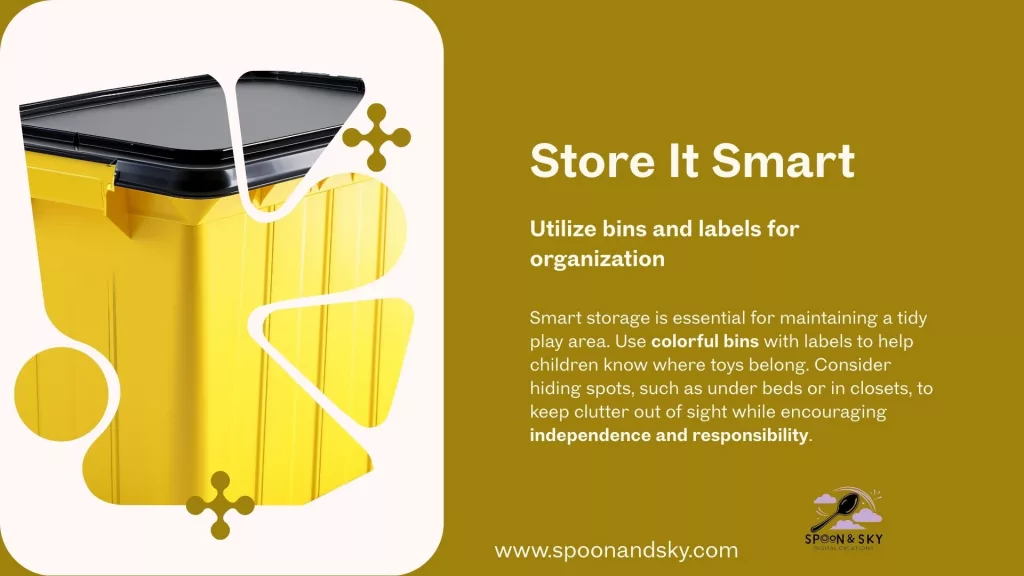
How and where you store toys matters just as much as which ones you rotate.
- Clear bins with lids: Let you see what’s inside without rummaging.
- Opaque tubs or bags: Better if you don’t want curious eyes sneaking peeks.
- Label everything: Use categories or even photos to remind you what’s inside.
Where to stash them:
- Under beds
- Top shelves of closets
- Storage ottomans or benches
- The garage (if climate-safe)
💡 Pro tip: Store rotation toys somewhere out of sight to keep the system effective.
Hack #3: The 4–6 Week Rule
How often should you rotate toys? Aim for every 4–6 weeks.
- Long enough that kids miss their old favorites.
- Short enough that boredom doesn’t creep in.
Some families prefer monthly swaps, while others do seasonal rotations. Follow your child’s cues — if they seem restless or less engaged, it might be time for a switch.
Hack #4: Travel & Outing Toys
Not all toys belong in the daily mix. Some are special “outing” toys — small, quiet, packable treasures that save the day in restaurants, car rides, or waiting rooms.
- Great options:
- Mini coloring kits
- Sticker books
- Magnetic play sets
- Small puzzles in zip bags
- A favorite small action figure or doll
💡 Parent hack: Keep a “go-bag” of these ready by the door or in the car. They’re lifesavers when you need 10 extra minutes of peace.
Hack #5: Theme-Based Rotation
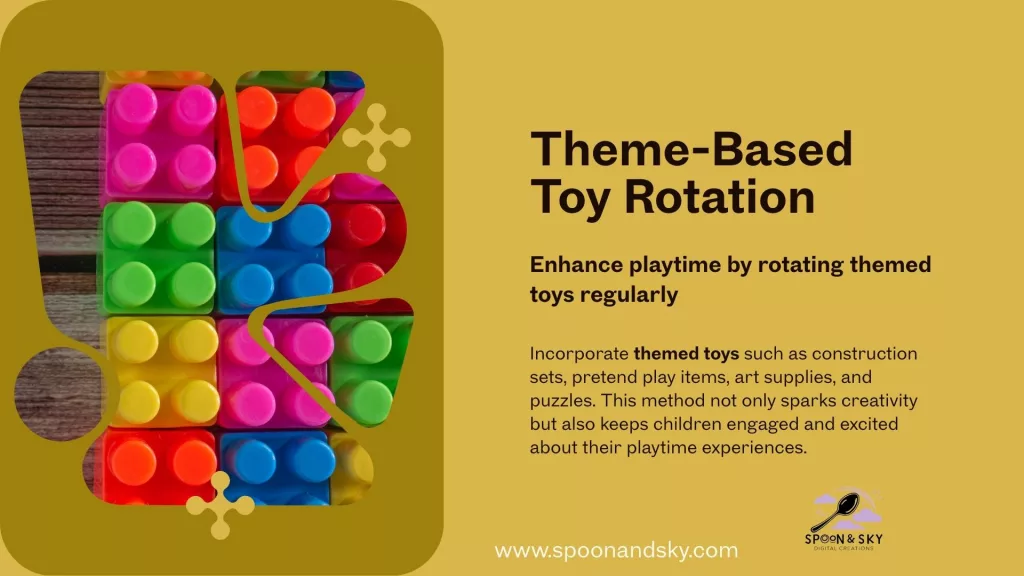
Toy rotation doesn’t have to be random. Try rotating by theme:
- Construction week: Lego, blocks, magnetic tiles.
- Pretend play week: Play kitchen, dolls, costumes.
- Art week: Easel, craft supplies, stamps.
- Puzzle week: Jigsaws, tangrams, shape sorters.
This keeps play fresh and helps kids dive deep into one kind of play at a time.
Hack #6: The Surprise Box
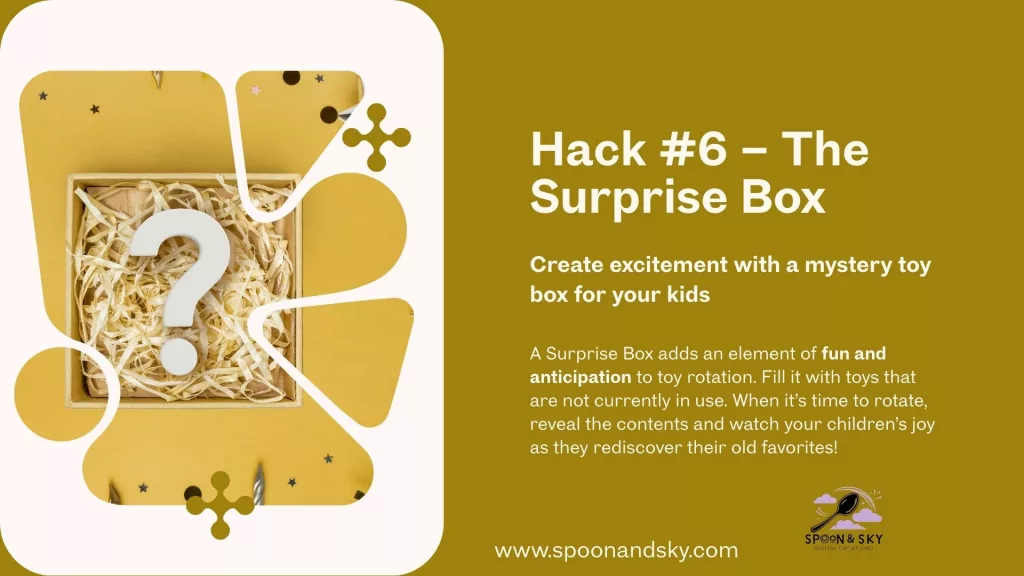
Want to really delight your child? Create a “surprise box.”
- Place a mix of smaller toys in a sealed bin.
- Bring it out once a month like a gift.
- Rotate what goes inside each time.
The element of mystery makes play even more exciting.
Hack #7: Don’t Forget the Classics
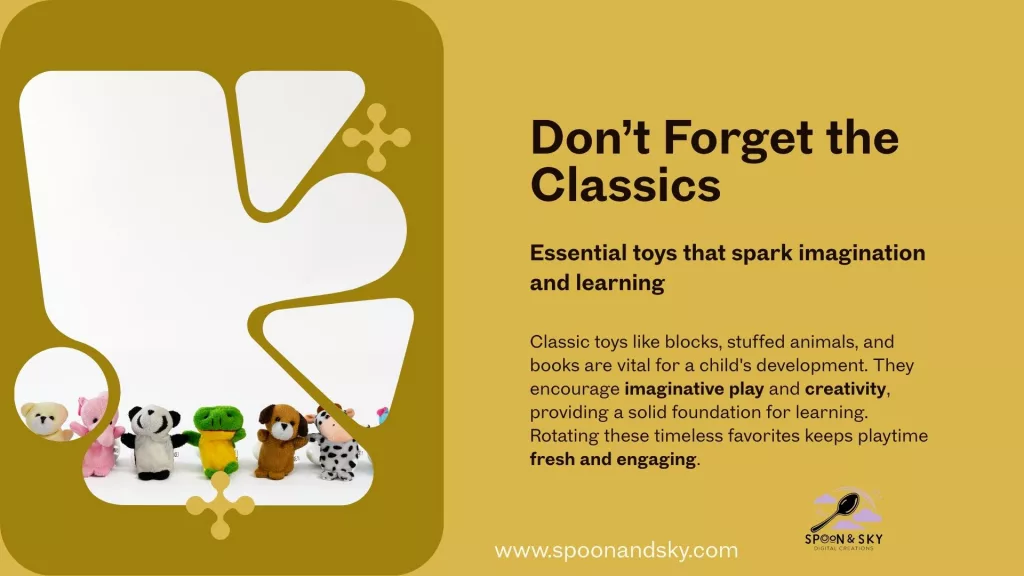
Some toys don’t need to rotate because they’re the anchors of play:
- A favorite stuffed animal or doll
- Building blocks
- A small selection of books
Keep these constants accessible at all times. Rotation works best when paired with reliable favorites.
Hack #8: Declutter as You Go
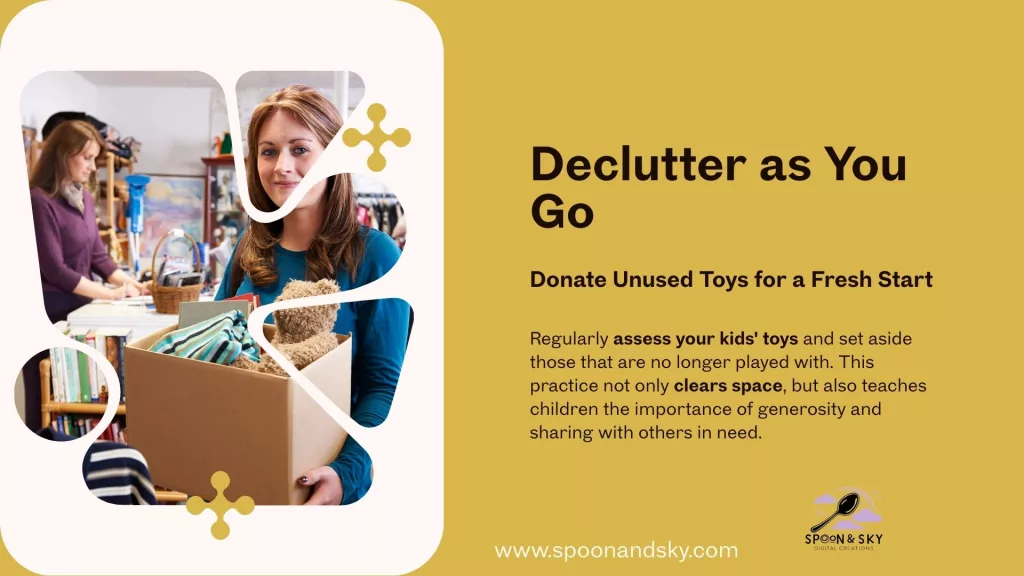
Rotation is also a great opportunity to declutter.
When a toy comes out of storage and your child barely notices it, that’s your cue. Pass it on, donate it, or repurpose it. This keeps the toy collection manageable and meaningful.
Hack #9: Involve Your Kids
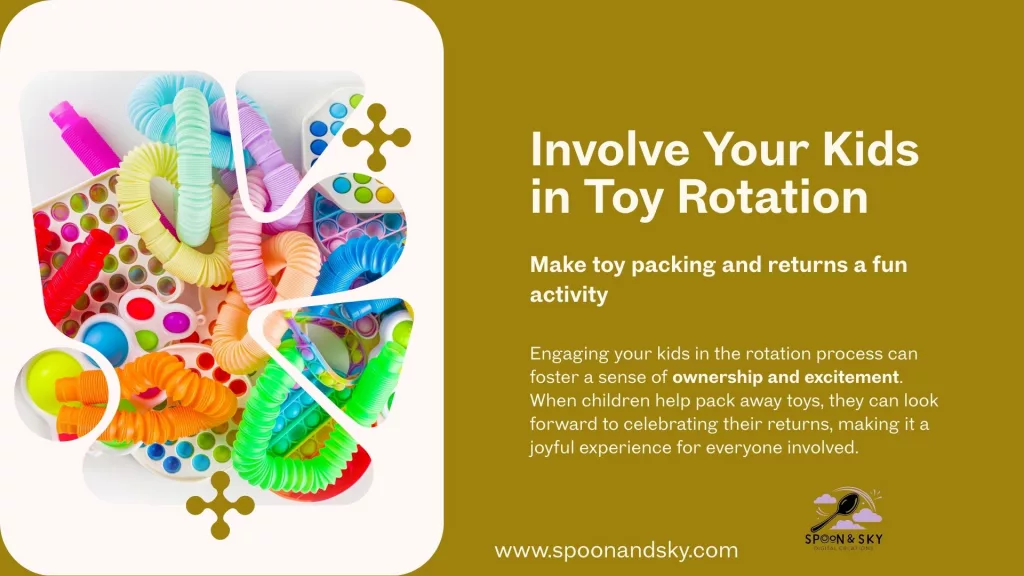
The best systems are the ones kids understand.
- Let them help pack toys away (“Let’s give these a rest”).
- Celebrate when old toys return (“Look who’s back!”).
- Encourage them to suggest what stays or goes.
This teaches decision-making, responsibility, and appreciation.
Hack #10: Balance, Not Perfection
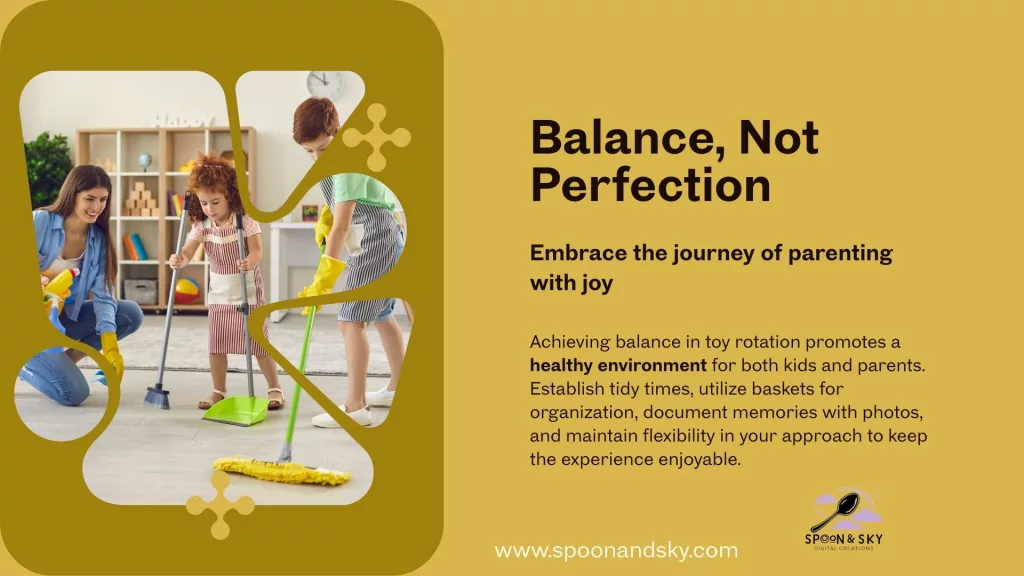
Remember: the goal isn’t a showroom-worthy playroom. It’s balance.
Some weeks, toy rotation will be seamless. Other weeks, every toy might end up dumped on the floor anyway. That’s okay. The rhythm matters more than the rules.
Extra Parent Tips
- Pair with tidy time: End the day by putting out toys back in baskets. With fewer toys out, cleanup is quicker.
- Use baskets by category: Even within a rotation, group like toys together for easier access.
- Photograph sets: Snap a picture of how a puzzle or block set looks when complete. Print and tape it to the box for easier cleanup.
- Keep it flexible: Don’t stress about the schedule. If your child is deeply engaged with something, keep it out longer.
Why Toy Rotation is Worth It
Toy rotation isn’t about limiting fun — it’s about creating space for deeper, calmer, more imaginative play.
- Kids play longer with fewer toys.
- Parents enjoy calmer, cleaner spaces.
- Everyone benefits from less overwhelm.
And the best part? It doesn’t cost a thing. You’re not buying more — you’re rediscovering what you already have.

Conclusion: Less Really is More
When you pack away half the toy room, it might feel counterintuitive. But then you watch your child rediscover a puzzle like it’s brand new, or invent an elaborate game with just a handful of blocks, and you realize — less really is more.
Toy rotation isn’t about perfection. It’s about creating a rhythm that keeps play joyful, spaces calmer, and parents a little more sane.
So grab a bin, start small, and watch the magic unfold.
With fewer toys but fuller play,
Lily.


✨ Get Your Free Printable ✨
Looking for a simple way to bring a little more calm, structure, or creativity into your day?
Enter your email below and get instant access to your free printable from Spoon & Sky — made to spark joy, imagination, and gentle rhythms at home. 🌿
We’ll send your printable and a few kind, helpful ideas to your inbox. No spam — just calm, creative family tools.
Leave a Reply