

There comes a point in toddlerhood when a nap become… complicated.
Your once-predictable afternoon sleeper suddenly refuses to lie down.
You try rocking them, reading books, the quietest shushing known to humankind — and still, those bright eyes blink back at you as if to say:
“Sleep? Never heard of her.”
Yet later… the melting begins.
A tiny bump becomes a crisis.
A snack that looked slightly different becomes heartbreak.
The sheer emotional weight of existence becomes unbearable.
Welcome to the nap transition phase — that wobbly window between definitely needing a nap and absolutely convinced they don’t. It’s exhausting, confusing, and surprisingly emotional — both for toddlers and the grown-ups who love them.
And if no one has told you yet:
You’re not alone in this nap battle.
This guide is here to help you understand why naps get so tricky during this stage, share gentle tools to help your toddler (and yourself!) find afternoon calm, and offer real-life, honest parent-to-parent reminders that survival — not perfection — is the goal.
Deep breath. We’re in this together.
Why It Matters
Naps aren’t just breaks — they are brain repair and emotional reset buttons.
Toddlers ages 2–4 are in a whirlwind of development:
- Massive language leaps
- Rapid motor growth
- Their first experiments with independence
- Huge social and emotional shifts
- And an emerging awareness of personal power (“No!”)
All this change uses energy — a lot of it.
But here’s the catch:
As toddlers get older, they begin to resist sleep even when they desperately need it.
Why?
Because:
- 🧠 Their brains are too excited to stop learning
- 🎉 FOMO is real — play > sleep
- 💪 Independence means saying “No thanks!”
- ⏰ Internal sleep cues shift and become less obvious
- 😵 Meltdown threshold lowers as the day goes on
The result?
Parents find themselves negotiating with a tiny human whose mood can change like British weather.
Without daytime rest:
- Evenings become harder
- Bedtime stretches longer
- Night wakings become more likely
- Parents feel drained and powerless
So no — naps are not just “optional.”
They are still incredibly helpful.
But the reality is that the nap transition doesn’t happen cleanly.
It’s more like this:
“We nap on Mondays. Not on Tuesdays.
We nap in the pram on Wednesdays.
On Thursdays we fall asleep in the car at 4pm.
Fridays? Chaos.”
What toddlers need most during this messy middle stage:
✅ Rhythm
✅ Flexibility
✅ Emotional safety
✅ And a calm adult to co-regulate with (even if you’re running on caffeine and hope)
The Practical Framework 🌿
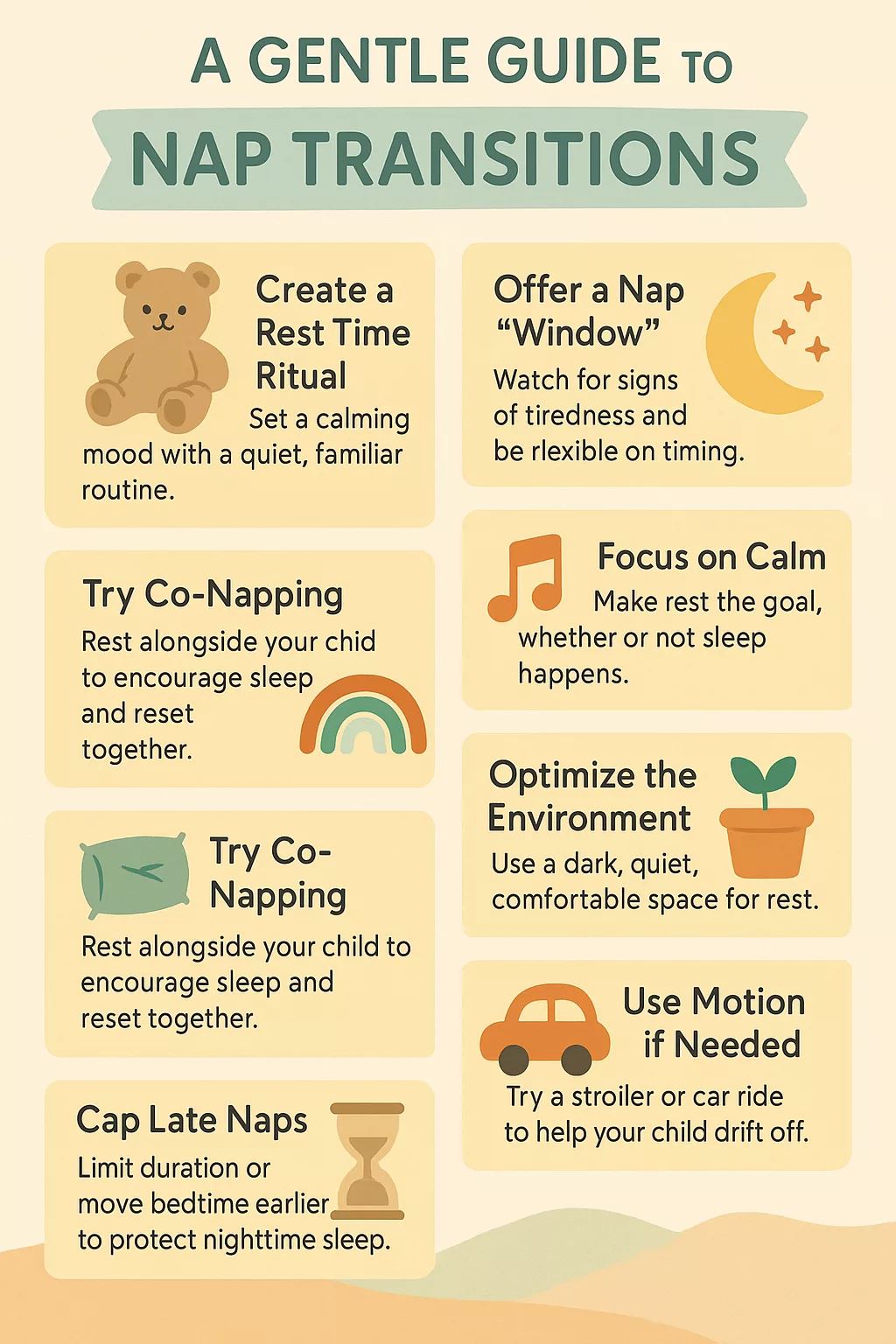
8 Gentle Ways to Support Nap Transitions Without Power Struggles
🧸 1. Create a Soft Landing Ritual
Don’t call it naptime — call it Rest Time.
Toddlers hear “nap” and think:
“You’re stopping my fun!”
Instead:
🪄 Set the mood the same way every day:
- Close curtains
- Offer a comfort object
- Play soft music or white noise
- Let them pick a quiet book to “read”
Say:
“Our bodies worked hard this morning.
Now we rest to feel strong again.”
🌙 2. Use a “Nap Window” Instead of a Fixed Time
Instead of expecting 1pm sharp, offer a sleep window (e.g., 12:30–2:00pm).
Follow signs like:
- Rubbing eyes
- Slower movements
- Clumsiness
- Increased clinginess
- Sudden tantrums
- That glazed donut look… 👀
When you see the signs → move toward rest.
🎶 3. Let Calm Come First, Sleep Second
Not every rest time results in sleep — and that’s okay.
🪄 Try:
- Audio stories
- Shadow puppets
- Looking at pictures in bed
- Sensory breathing — “Smell the flower, blow the cloud”
The goal?
Reduce stimulation.
If they fall asleep, wonderful.
If not, they still rested their brain.
🌈 4. Choice + Agency = Less Resistance
Offer choices that all lead to calm:
- “Bed or sofa nest?”
- “White noise or sleepy song?”
- “Two books or one book?”
You’re saying:
“You get to choose how to rest —
but rest is happening.”
This keeps the relationship safe, not combative.
💤 5. The Power of Co-Napping ❤️
For a long time, toddler naptime was my nemesis.
Every afternoon I would try to:
- Clean the kitchen
- Fold laundry
- Catch up on emails
- Prepare dinner
- Pay bills
- Be a productive adult
Meanwhile my 3-year-old would fight sleep like a tiny warrior.
We’d go back and forth…
I’d get frustrated.
He’d get frustrated.
Nobody rested.
Until one day…
I stopped trying to rush through naptime.
He wouldn’t sleep alone.
So I lay next to him.
Just for “a minute.”
I woke up an hour later.
My son curled into me, soft breathing against my arm.
And you know what?
The world didn’t fall apart.
The laundry waited.
The dishes waited.
The work waited.
But we didn’t wait.
From that day, afternoon sleep — our sleep — became a priority.
We nap together.
We reset together.
I learned:
Sometimes the best productivity is rest.
I stopped fighting naps and started embracing them.
That nap changed me.
Maybe it’ll change you too.
🪴 6. Use Environment to Support Tired Bodies
Small tweaks make a big difference:
- Dim lights
- Room between 18–20°C
- Drop background noise
- Soft textures
- Familiar scent (lavender lotion, favourite pillow)
If sensory needs are high:
- Weighted plush toy
- Gentle rocking
- Hand on back
This isn’t spoiling —
it’s supporting regulation.
🚗 7. The Motion Magic Option
Car or pram naps count.
Seriously.
If snoozing on the move keeps everyone sane?
Do it.
Celebrate it.
Extend it if you can.
No guilt.
No rules.
Just sleep.
⏳ 8. Protect Bedtime by Capping Late Naps
If your toddler crashes too late…
You may pay for it at bedtime.
🪄 Use this flow:
- Nap before 3pm → great
- Nap 3:30–4:00pm → shorter bedtime story
- Nap after 4:30pm → bedtime delay likely
If they do fall asleep late:
- Keep it a 20–30 minute catnap
- Move bedtime back only slightly
We’re playing the long game:
24-hour sleep balance.
“But What If They Don’t Nap?” — Reset Strategies for the Melty Afternoons
Some days, despite your best efforts…
they skip the nap.
When that happens:
💜 Compassion > frustration
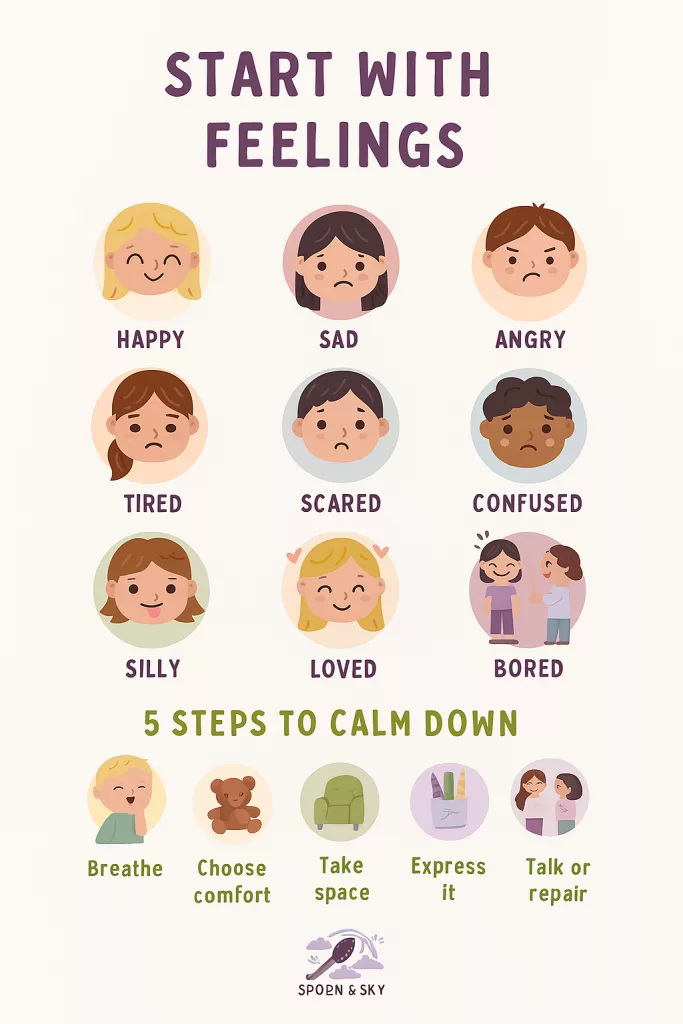
Have a look at this blog post for more regulation tips. Here are toddler + parent resets that help everyone hold it together:
Reset Tools for Toddlers
✅ Calm snack break (banana + water is magic)
✅ Bath or warm water play
✅ Couch nest with blankie + soft show
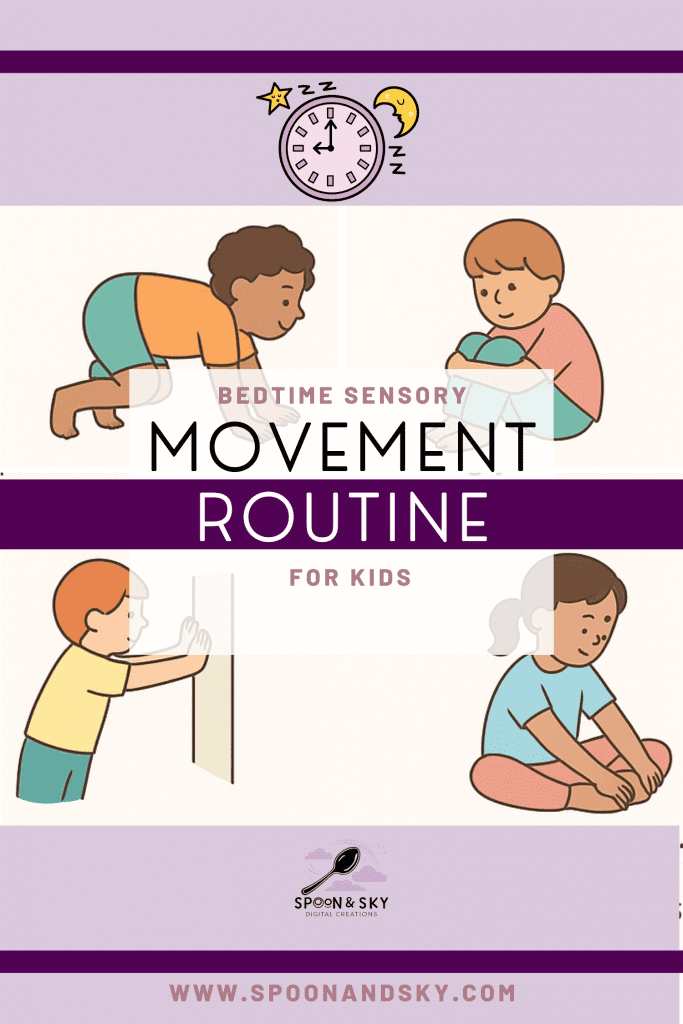
✅ Movement reset: gentle stretches, star jumps indoors
✅ Silly play: “Shake out the grumpies!”
✅ Go outside — fresh air is sooo regulating
✅ Cuddle cave under a blanket
The goal:
Remove stimulation + refill energy slowly.
Reset Tools for Parents
✅ Sit down — yes, YOU — for 5 minutes
✅ Tea, water, something nourishing
✅ Put your phone down (nervous systems mimic screens!)
✅ Breathe with hands on heart
✅ Repeat a grounding mantra:
“This is a moment.
It won’t last forever.”
And the most important one…
Let go of the day you imagined.
Choose the day you have.
A Note on Guilt
It’s easy to feel like:
- you didn’t try hard enough
- you let them miss sleep
- you’re messing something up
You’re not.
If skipping a nap turns into more tears:
That’s data, not failure.
Tomorrow is a new try.
Reflection
Nap transitions are messy because growth is messy.
Saying goodbye to the reliable afternoon nap is a milestone —
one that signals a child moving toward bigger social days, more independence, and longer stretches of play.
It’s supposed to feel hard.
But through it all, your child learns:
- that rest is safe
- that feelings are supported
- that they can push boundaries and still be loved
And you learn:
- to adapt
- to soften
- to trust your instincts
- to rest when your body asks (even if dishes are shouting)
When we honour the nap dance — the yes, the no, the maybe —
we teach our children (and ourselves) the art of listening to our bodies.
This isn’t about winning the nap battle.
It’s about staying connected through the wobble.
You’re doing beautifully.
Take a nap if you can.
You deserve it too.
Afternoons don’t need to be battles. Get your naptime guide here:
Sometimes the greatest act of parenting is the quiet one:
laying down,
closing your eyes,
breathing in the warmth of a child who still chooses closeness,
even while learning independence.
May your naps be restorative,
and your resets gentle.
😴 With soft blankets and freshly fluffed pillows,
Lily Luz – Spoon & Sky Studios


✨ Get Your Free Printable ✨
Looking for a simple way to bring a little more calm, structure, or creativity into your day?
Enter your email below and get instant access to your free printable from Spoon & Sky — made to spark joy, imagination, and gentle rhythms at home. 🌿
We’ll send your printable and a few kind, helpful ideas to your inbox. No spam — just calm, creative family tools.
Leave a Reply