
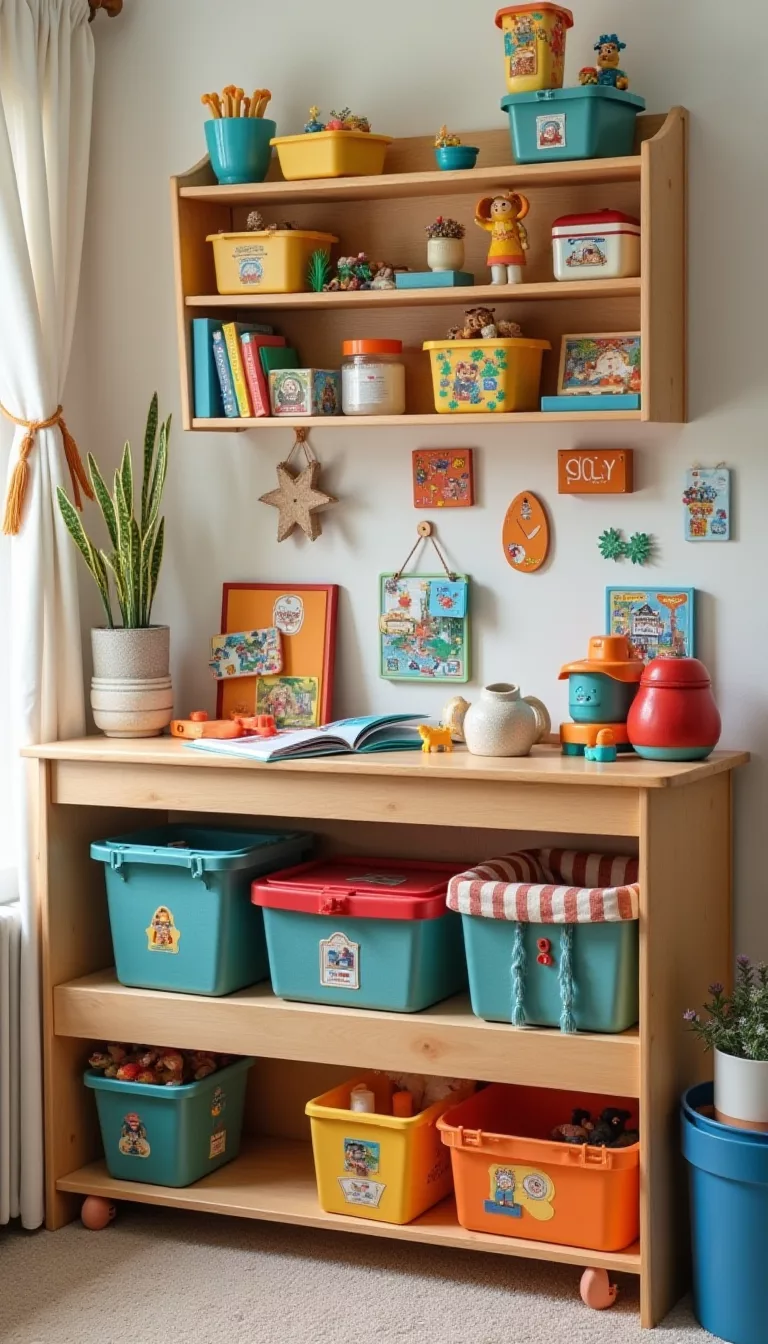
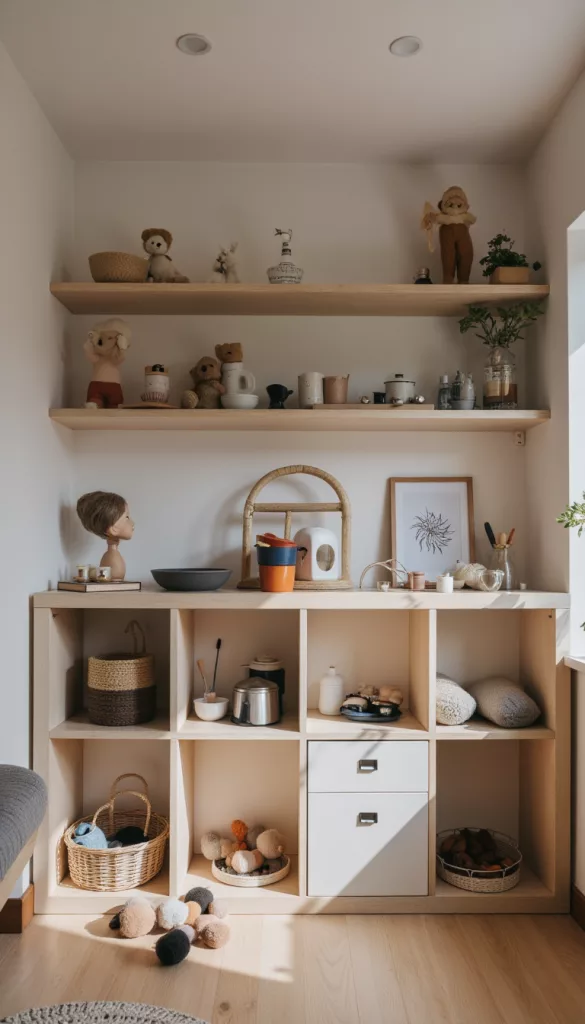
Looking for calm summer play space ideas that actually work during summer holidays? In this guide, we’re sharing simple playroom organization tips, toy storage ideas for kids, and easy summer reset strategies that encourage independent play while reducing mess and overwhelm for families with children ages 3–8.
Summer has a way of changing the rhythm of a home.
The routines soften. The days stretch longer. The snack requests multiply. And suddenly every room begins to look like a toy explosion happened in slow motion.
If you have children between 3 and 8, you’ve probably noticed something else too:
The more toys and activities available… the less peacefully your children often play.
Not because they are doing anything wrong.
But because young children thrive on visual calm, predictable systems, and spaces that quietly tell them what to do.
That’s why at Spoon & Sky, we believe:
Structure is safety. Not control.
A calm play space is not about perfection.
It is not about expensive storage bins or magazine-worthy shelves.
It is about creating an environment that helps children:
- play more independently,
- transition more smoothly,
- feel less overwhelmed,
- and enjoy their home more peacefully during the busy summer months.
Today we’re going to walk through:
- easy summer playroom refresh ideas,
- realistic toy organization,
- calming storage solutions,
- independent-play setups,
- and gentle systems that actually work for real families.
Because summer feels lighter for everyone when the home feels calmer too.
Why Summer Play Spaces Feel So Chaotic
During the school year, children naturally move through predictable rhythms.
School.
Snack.
Homework.
Dinner.
Bedtime.
But summer changes the pace completely.
Children are:
- home more often,
- moving between indoor and outdoor play,
- using more toys throughout the day,
- and needing more stimulation and novelty.
Without gentle structure, the environment can quickly become overstimulating.
And overstimulated children often:
- dump toys instead of engaging deeply,
- bounce rapidly between activities,
- struggle to tidy,
- and become dysregulated faster.
This is why “more toys” rarely creates calmer play.
In fact, most children play better when they can clearly see:
- what is available,
- where things belong,
- and what they can do independently.
The Goal Is Not Less Fun — It’s Easier Play
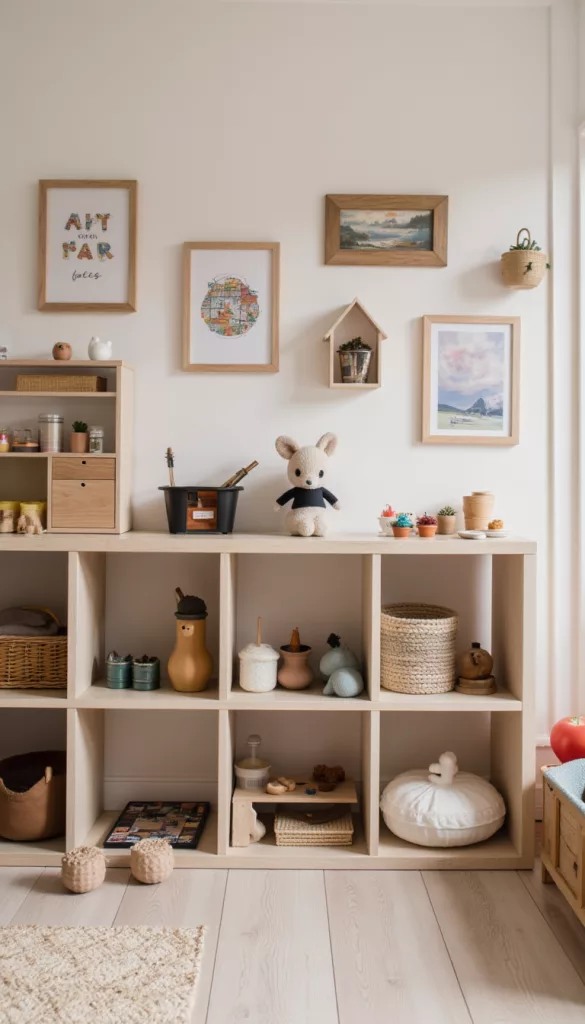
One of the biggest mindset shifts for parents is understanding this:
A calm space does not reduce creativity.
It supports it.
When children are overwhelmed by visual clutter, they often struggle to:
- focus,
- imagine,
- persist,
- and settle into meaningful play.
But when a space feels intentional and manageable, children tend to:
- stay with activities longer,
- make more independent choices,
- tidy more easily,
- and transition with less resistance.
You are not trying to create a showroom.
You are trying to create:
a home that works with your family instead of against it.
Start With a Simple Summer Reset
Before buying storage bins or reorganizing shelves, begin with a simple reset.
Not a massive overhaul.
Just a thoughtful refresh.
Ask Yourself:
- What toys are never played with?
- What always gets dumped?
- What activities lead to calm, focused play?
- What creates immediate chaos?
- What can my child access independently?
- What is visually overwhelming?
Summer is the perfect time to edit your environment gently.
You do not need to remove everything.
You simply need to make the room easier to use.
The Best Summer Playroom Tip: Rotate, Don’t Display Everything
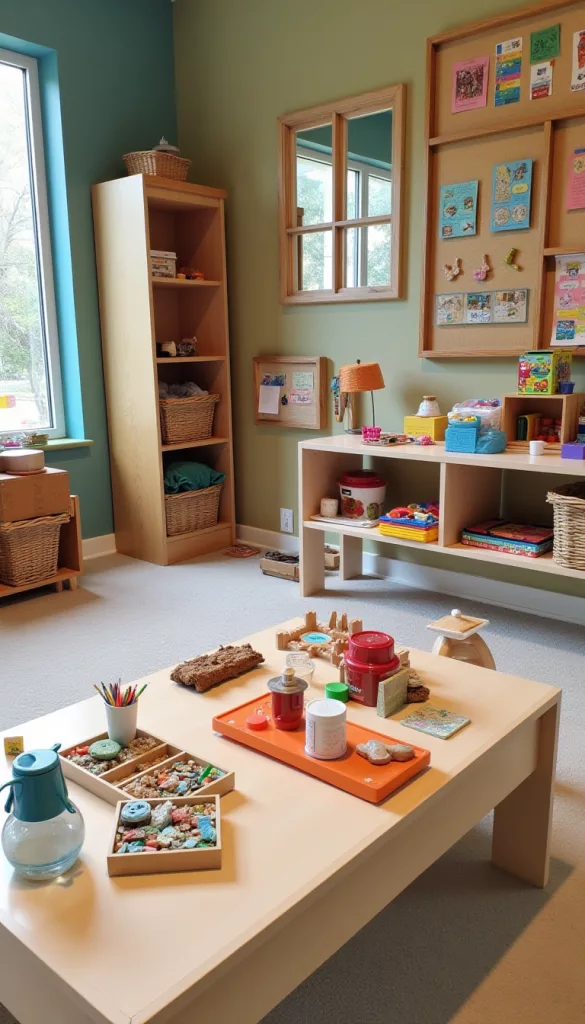
Toy rotation is one of the most effective ways to reduce chaos without constantly buying new things.
And the best part?
Children often play better with fewer visible choices.
A Simple Rotation System
Try dividing toys into categories:
- building toys,
- pretend play,
- creative materials,
- puzzles,
- sensory activities,
- outdoor items.
Then keep only a small portion available at one time.
You can rotate:
- weekly,
- every two weeks,
- or whenever play starts feeling stale.
The result is often immediate:
- deeper play,
- less dumping,
- easier cleanup,
- renewed excitement.
Children experience familiar toys as “new” again.
Storage Solutions That Actually Help Children
The best storage systems are not the prettiest ones.
They are the ones children can understand and maintain.
1. Open Baskets
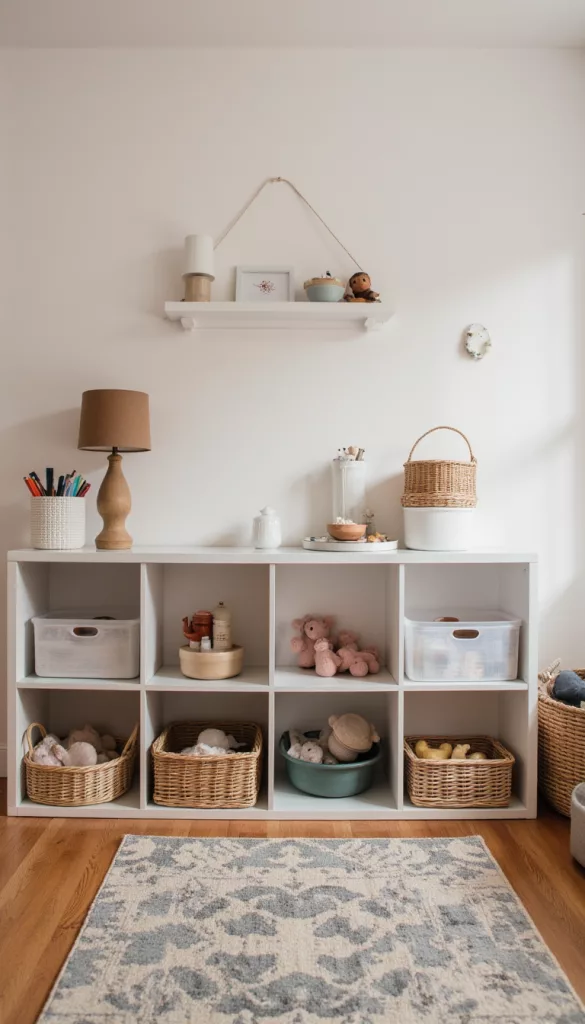
Open baskets work beautifully because children can:
- see what exists,
- grab items independently,
- and return them easily.
Lids often become barriers for younger children.
Try:
- one category per basket,
- simple labels or photos,
- fewer items per container.
Less visual clutter creates more calm.
2. Low Shelves Children Can Reach
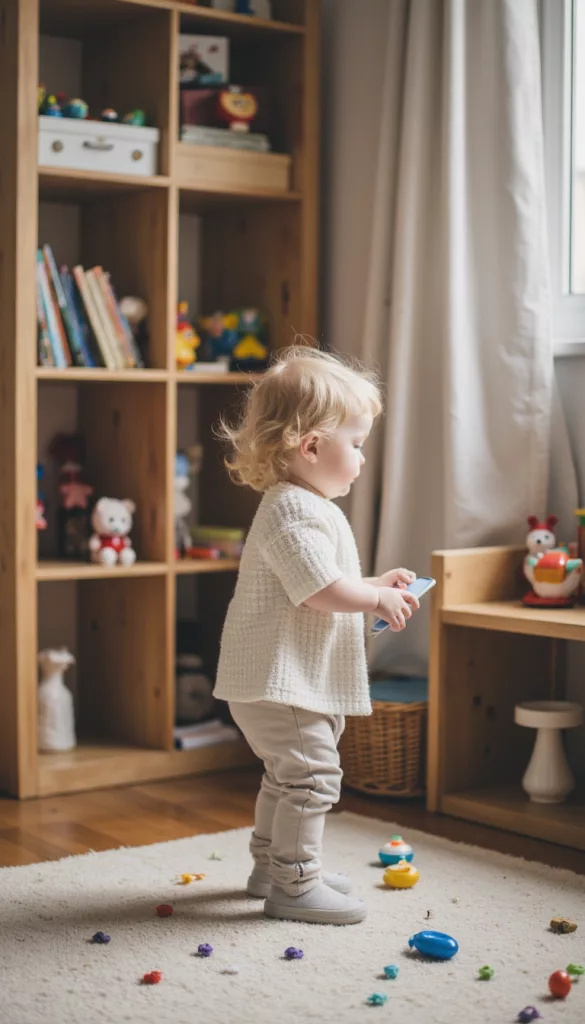
If children constantly ask for help accessing toys, the system may not be working for them.
Low shelves encourage:
- independence,
- responsibility,
- and smoother transitions between activities.
Display only a few activities at eye level.
This naturally guides children toward calmer choices.
3. Clear Activity Trays
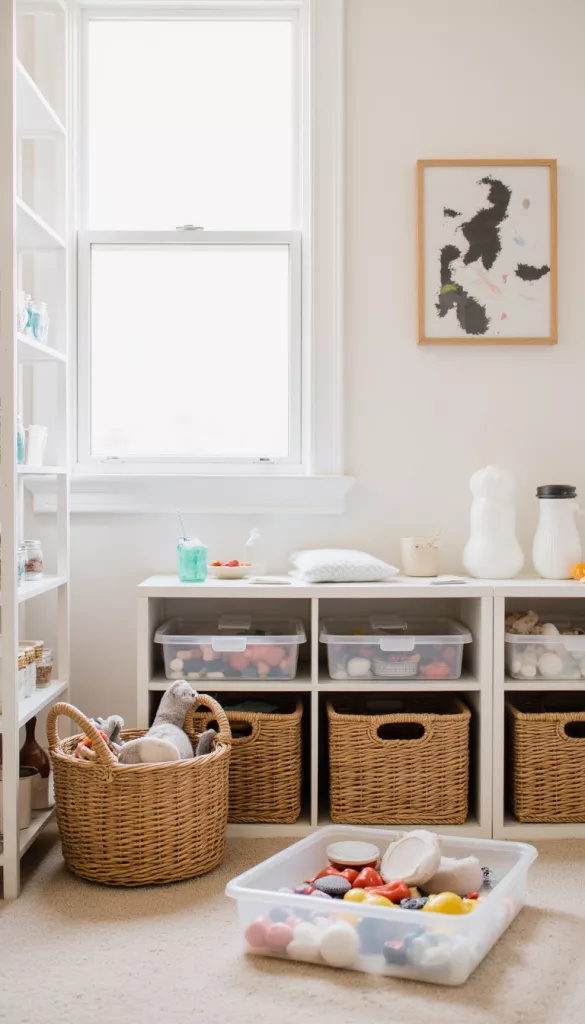
Activity trays are wonderful during summer holidays because they create:
- contained play,
- easy setup,
- and easy cleanup.
Examples:
- sticker tray,
- drawing tray,
- LEGO tray,
- play dough tray,
- nature collection tray.
Children can carry them independently and return them afterward.
This reduces:
- giant floor messes,
- scattered materials,
- and parent overwhelm.
4. Vertical Storage for Small Homes
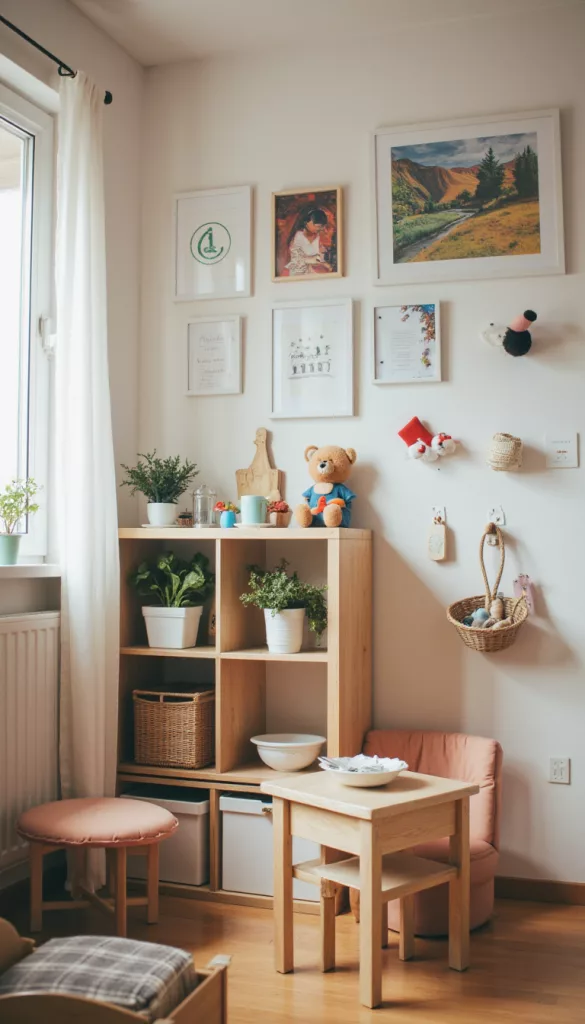
If space is limited, vertical storage can completely change how a room feels.
Consider:
- wall bookshelves,
- hanging organizers,
- pegboards,
- over-door storage,
- cube shelves,
- art display rails.
The goal is not storing more.
It is creating:
breathing room.
Create “Zones” Instead of One Giant Play Area
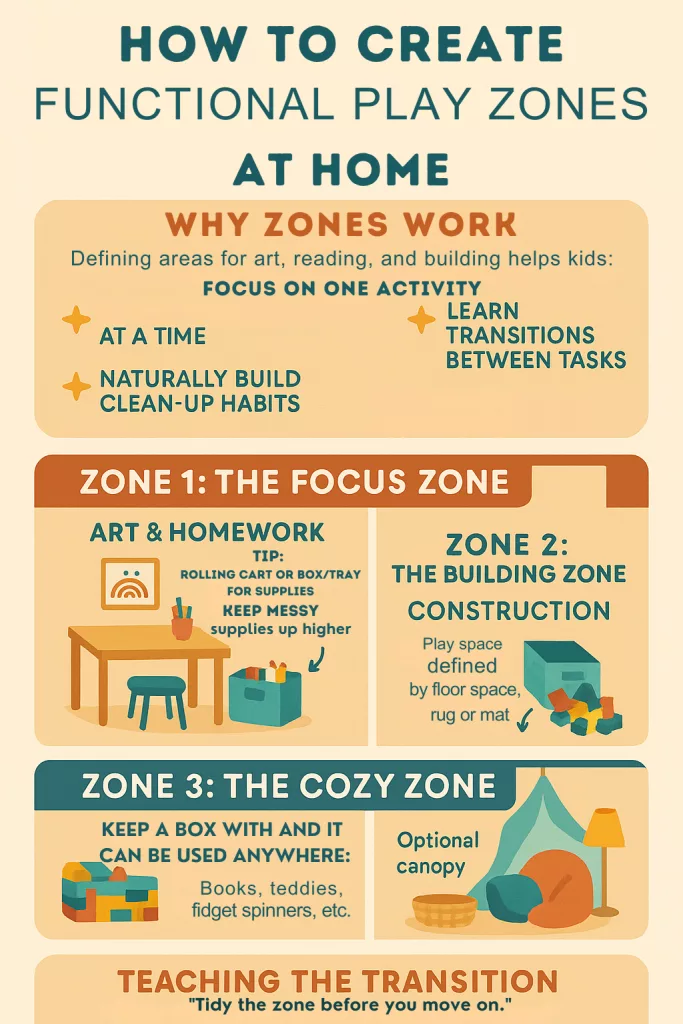
Children often regulate better when spaces have gentle purpose.
Instead of one overflowing toy room, try creating mini-zones.
Examples:
Quiet Corner
- books,
- soft pillows,
- stuffed animals,
- drawing materials.
Creative Zone
- paper,
- stickers,
- colouring supplies,
- scissors,
- glue.
Building Zone
- magnetic tiles,
- LEGO,
- wooden blocks.
Pretend Play Zone
- play kitchen,
- dolls,
- costumes,
- puppets.
Zones help children:
- focus longer,
- transition easier,
- and understand expectations more clearly.
Summer Refresh Ideas That Feel Exciting Without Buying Everything New
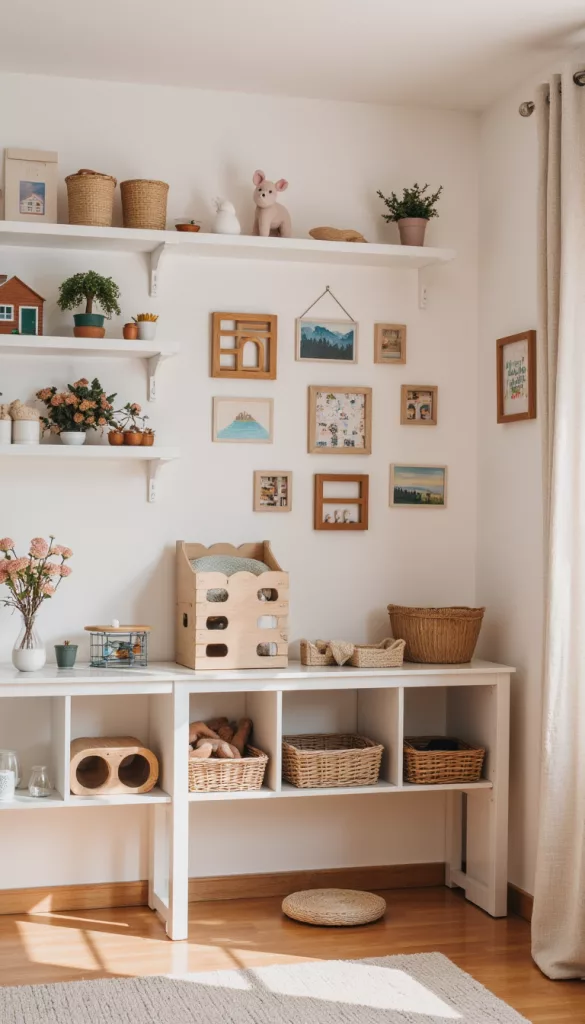
Children do not need an entirely new playroom for summer.
Small seasonal changes can make the environment feel fresh and engaging.
Easy Summer Refresh Ideas
- rotate books seasonally,
- add nature treasures,
- create an outdoor activity basket,
- hang children’s artwork,
- add floor cushions,
- introduce a summer sensory bin,
- create a picnic-style reading corner,
- place activity prompts in jars,
- add a calm music playlist,
- create a simple “morning invitation to play.”
Even small visual shifts can renew interest dramatically.
One of the Most Powerful Things You Can Add: Predictability
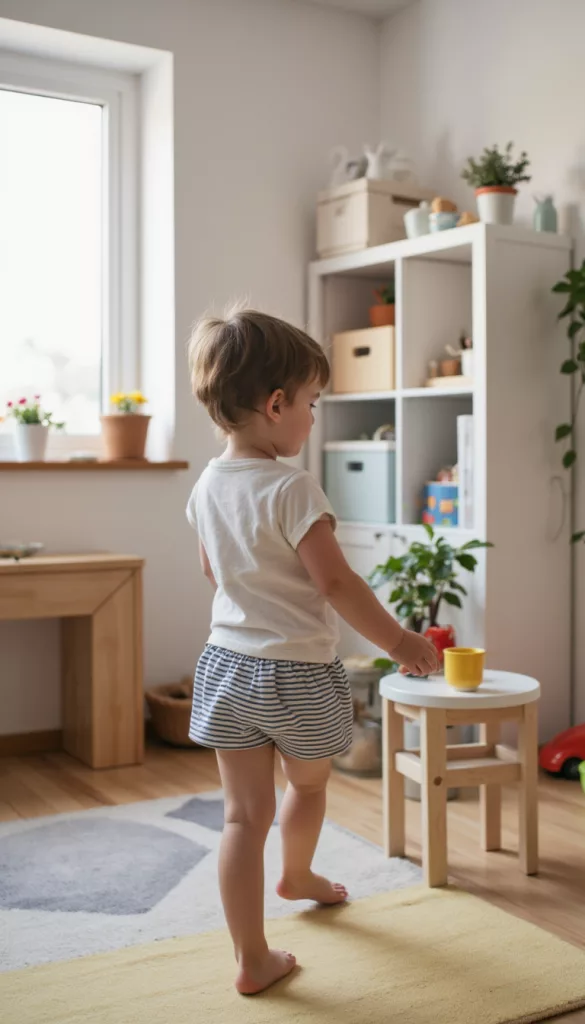
Children feel calmer when they know:
- what comes next,
- where things belong,
- and how the day generally flows.
This is why visual routines work so well.
Especially during summer.
You do not need rigid schedules.
You simply need:
- predictable anchors,
- gentle transitions,
- and calm expectations.
For example:
- morning tidy before outdoor play,
- quiet reading after lunch,
- creative time before screen time,
- evening reset before dinner.
Rhythms reduce friction.
The Secret to Easier Cleanup
Cleanup becomes easier when:
- fewer items are available,
- storage is obvious,
- children are not overwhelmed,
- and routines are consistent.
A few simple strategies:
- tidy one zone at a time,
- use music,
- use picture labels,
- keep cleanup short,
- reset daily instead of perfectly,
- tidy with children instead of constantly directing them.
Connection first.
Then cooperation.
Calm Homes Are Built Slowly
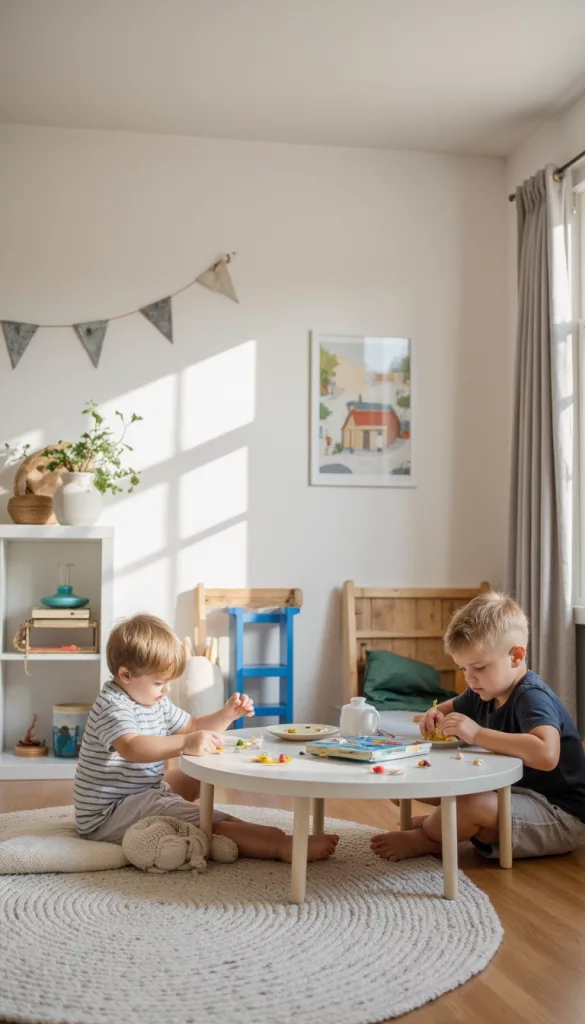
A calm home is not created in one weekend.
It is built through small systems that support your family over time.
Tiny adjustments.
Gentle structure.
Visual calm.
Predictable rhythms.
Independent play.
And perhaps most importantly:
spaces that allow children to feel capable inside their own home.
Because summer does not have to feel chaotic to feel joyful.
Sometimes the calmest homes are not the quietest ones.
They are simply the ones designed with care.
And that changes everything.
Here’s to slower days, fuller hearts, and children who feel seen,
Lily
Spoon & Sky


✨ Get Your Free Printable ✨
Looking for a simple way to bring a little more calm, structure, or creativity into your day?
Enter your email below and get instant access to your free printable from Spoon & Sky — made to spark joy, imagination, and gentle rhythms at home. 🌿
We’ll send your printable and a few kind, helpful ideas to your inbox. No spam — just calm, creative family tools.
Leave a Reply