
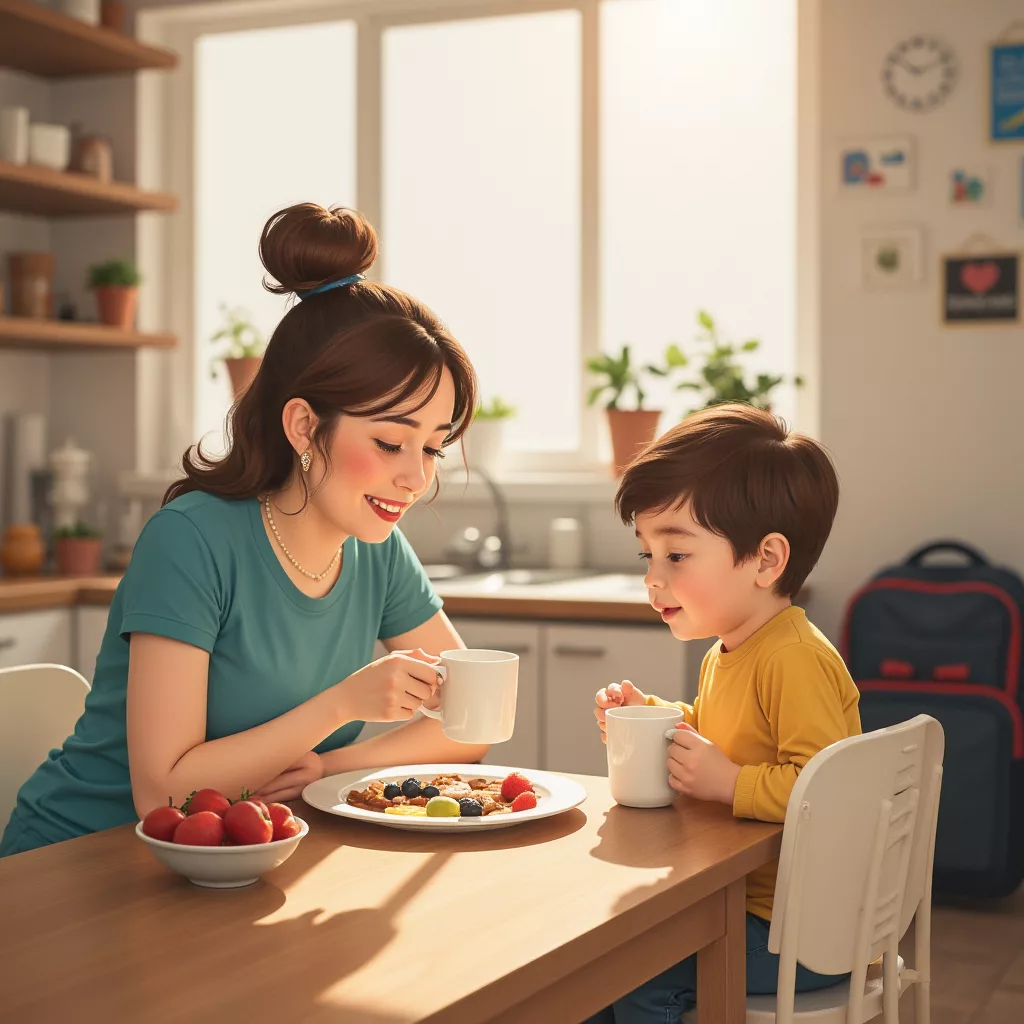
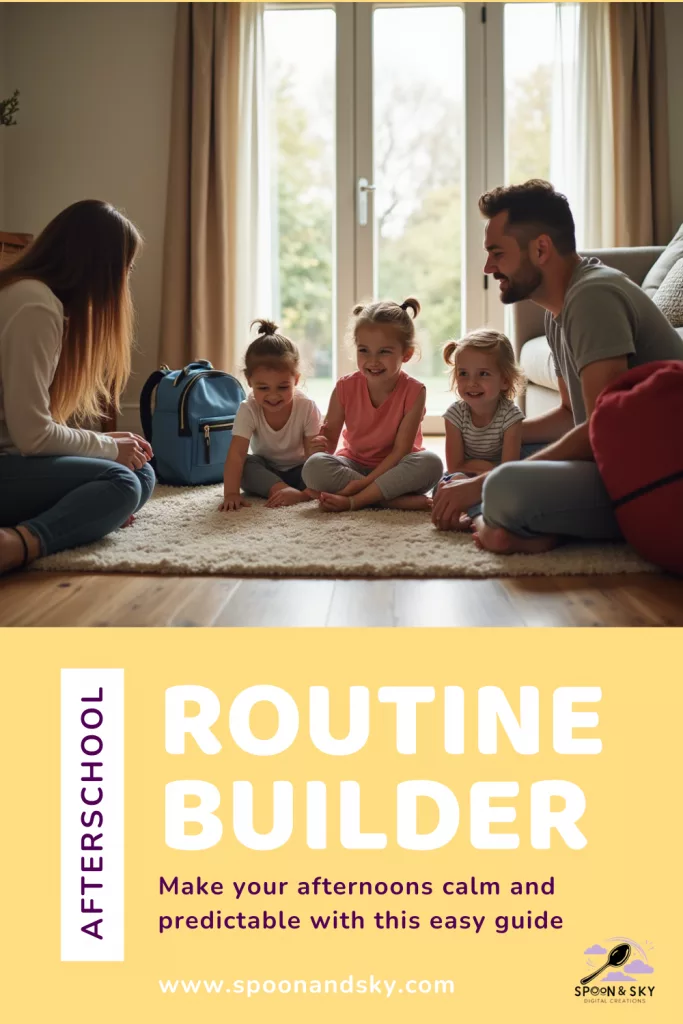
If you collect them from school and your routine is: shoes half-off, bag dragging, snack requests already flying.
Within minutes, your home becomes a swirl of half-eaten fruit, homework papers, and sibling chatter.
It’s beautiful… and exhausting.
The hours between school pick-up and bedtime can feel like a mini-marathon. Everyone’s tired, everyone’s hungry, and yet somehow there’s still so much to do.
For many families, the tricky part isn’t the tasks themselves — it’s the constant decision-making.
“Should we do homework first or snack first?”
“When can I play?”
“Why do I always have to remind you to unpack your bag?”
That’s where a visual planner comes in — not as a rigid schedule, but as a calm, colorful roadmap that helps children see what’s next, make choices, and move through the afternoon with confidence.
✨ What Is a Visual Planner (and Why It Works)
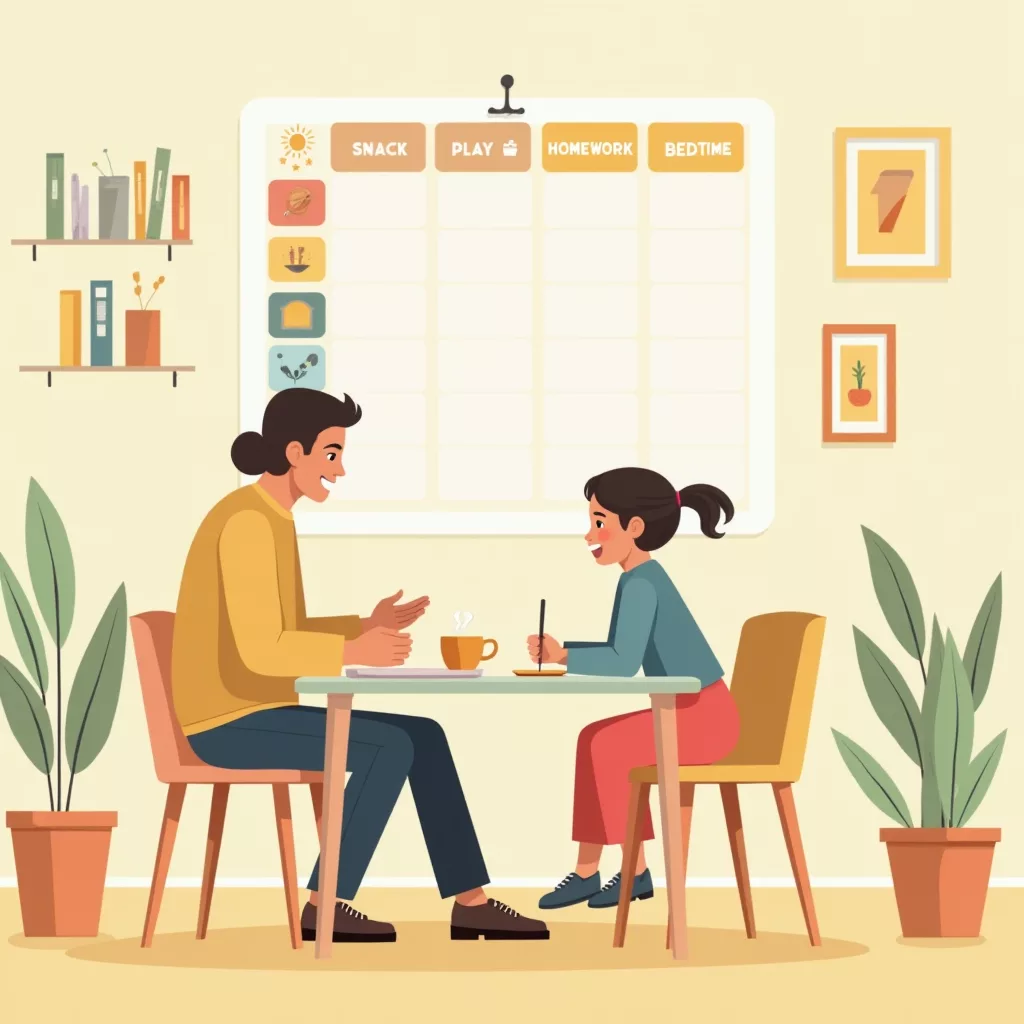
A visual planner is a set of picture-based cards, charts, or magnets that show the order of your child’s after-school routine: snack, play, homework, dinner, bath, storytime.
It’s part schedule, part communication tool, and part magic trick — because it removes constant verbal nagging and replaces it with visual cues.
💡 Why it works so well for kids
- It gives predictability. Children feel safe when they know what’s coming next.
- It reduces power struggles. Instead of “Mum said,” it becomes “The planner says.”
- It builds independence. Visuals let even pre-readers follow along.
- It offers choice within structure. You can present two cards — Play or Snack first? — and let them choose the order.
- It helps emotional regulation. Seeing tasks visually laid out helps kids pace their energy and anticipate transitions.
At Spoon & Sky, we like to say that visuals “turn chaos into calm without removing the magic.”
🌿 Step 1: Begin with a 10-Minute Re-Connect Moment
Before any routine, start with connection.
You’ve both had separate days; this small pause brings you back together.
🕰️ Why it matters
Children often walk through the door carrying invisible backpacks full of sensory overload — noise, expectations, social effort. A short reconnection helps them release the day before diving into what’s next.
💛 Try one of these simple ideas
- The Snack-and-Chat: Sit together for 10 minutes with something easy — apple slices, popcorn, or a smoothie. Ask, “What was your favorite part of today?” and listen, no multitasking.
- The Floor Hug: For younger kids, lie on the floor, stretch arms wide, and let them collapse in for a silly squeeze. Laughter resets their nervous system.
- Quiet Re-Set: Dim the lights, light a candle, or turn on soft music. Draw, color, or build Lego side-by-side in silence for 10 minutes.
- Movement Moment: Put on a 2-minute song and dance, shake, or jump it out together. Movement releases stored energy.
After this gentle re-connect, your child’s body and brain are ready for the After-School Flow — that’s where your visual planner takes over. Check out this blog post for more.
🗂️ Step 2: Create Your After-School Visual Planner
🖍️ Choose the Format
There’s no one right version — only what fits your family best.
| Type | Description | Best for |
|---|---|---|
| Card Set | Laminated cards or printables you can line up with Velcro or magnets. | Flexible choice & younger kids. |
| Poster Chart | A single printable with daily flow icons. | Quick reference near the fridge or hallway. |
| Flip Chart or Binder | Pages kids flip through as they move along. | Visual thinkers & kids who like tactile tools. |
| Digital Version | Tablet-friendly image board or app. | Tech-positive families or travel use. |
(Tip: You can use Spoon & Sky’s printable Visual Play Planner templates as your base — they’re designed to mix-and-match tasks, rest, and creativity.)
🧩 Core Routine Categories
A balanced after-school routine usually includes:
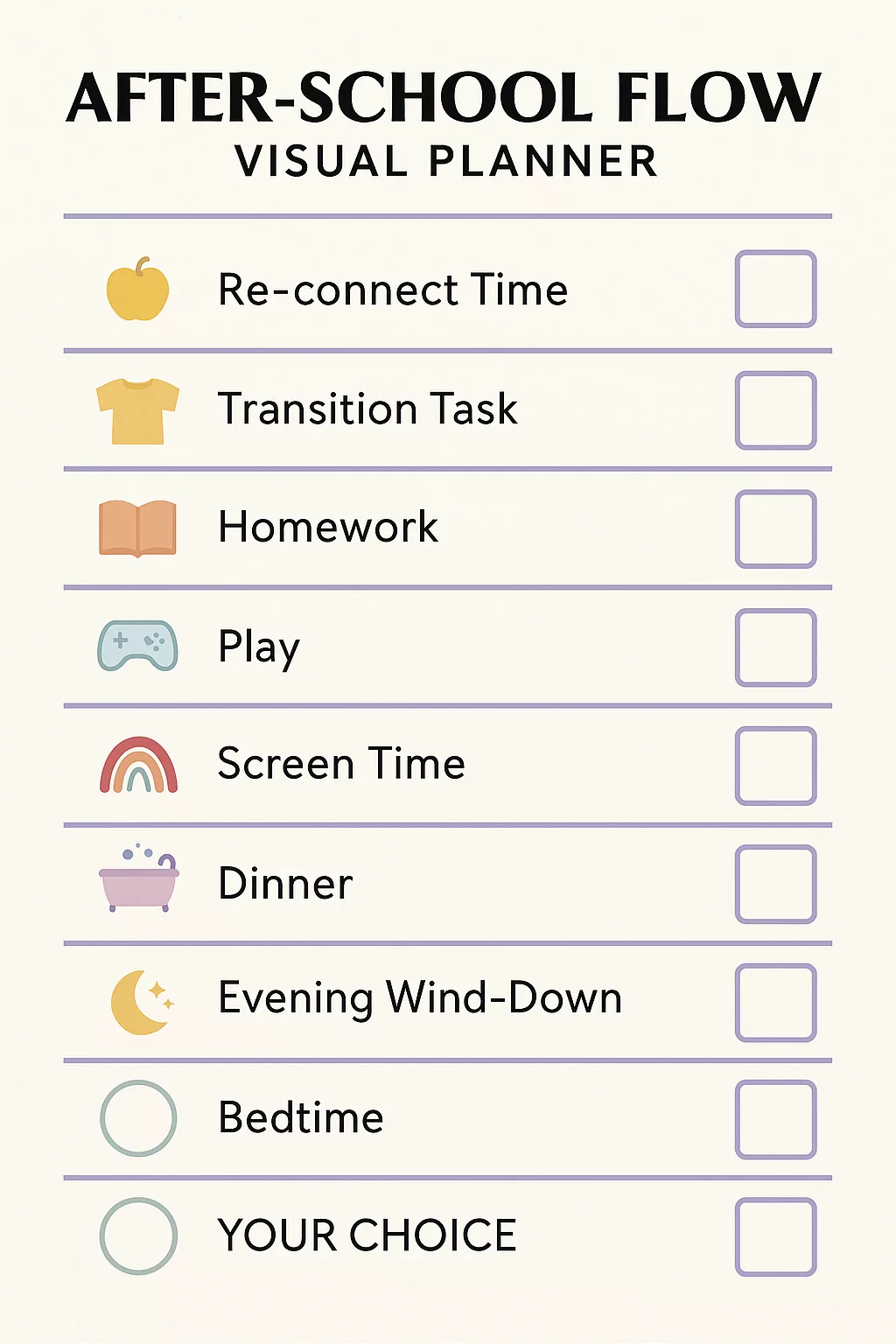
- Re-connect Time – snack, cuddle, talk, stretch.
- Transition Task – unpack bag, change clothes, tidy lunch box.
- Homework / Focus Block – short and structured (20–30 min).
- Creative or Outdoor Play – free choice, art, building, or nature.
- Screen or Chill Time – optional, time-limited, planned.
- Dinner & Family Time.
- Evening Wind-Down – bath, pajamas, reading, bedtime.
You can represent each step with simple icons or images: apple for snack, book for homework, swing for play, moon for bedtime.
🎨 Make It Together
Involve your child in the design process — this builds ownership and excitement.
- Let them choose colors or draw pictures for each task.
- Print photos of them doing each step (e.g., brushing teeth, putting on shoes).
- Decorate with stickers or washi tape.
- Give it a fun name: “My Afternoon Adventure,” “Calm Flow,” “Play & Plan Board.”
The more personal it feels, the more likely they’ll use it.
💬 Step 3: Use Language That Encourages Autonomy
How we talk about the planner matters as much as what’s on it.
Instead of:
“You have to do your homework now.”
Try:
“What comes next on your plan?”
“Would you like to start with snack or tidy-up today?”
This turns the planner into a shared tool — not a control mechanism.
Over time, children internalize the rhythm and begin to move through steps independently.
🧠 Step 4: Tips for Success
🌞 Keep It Visible
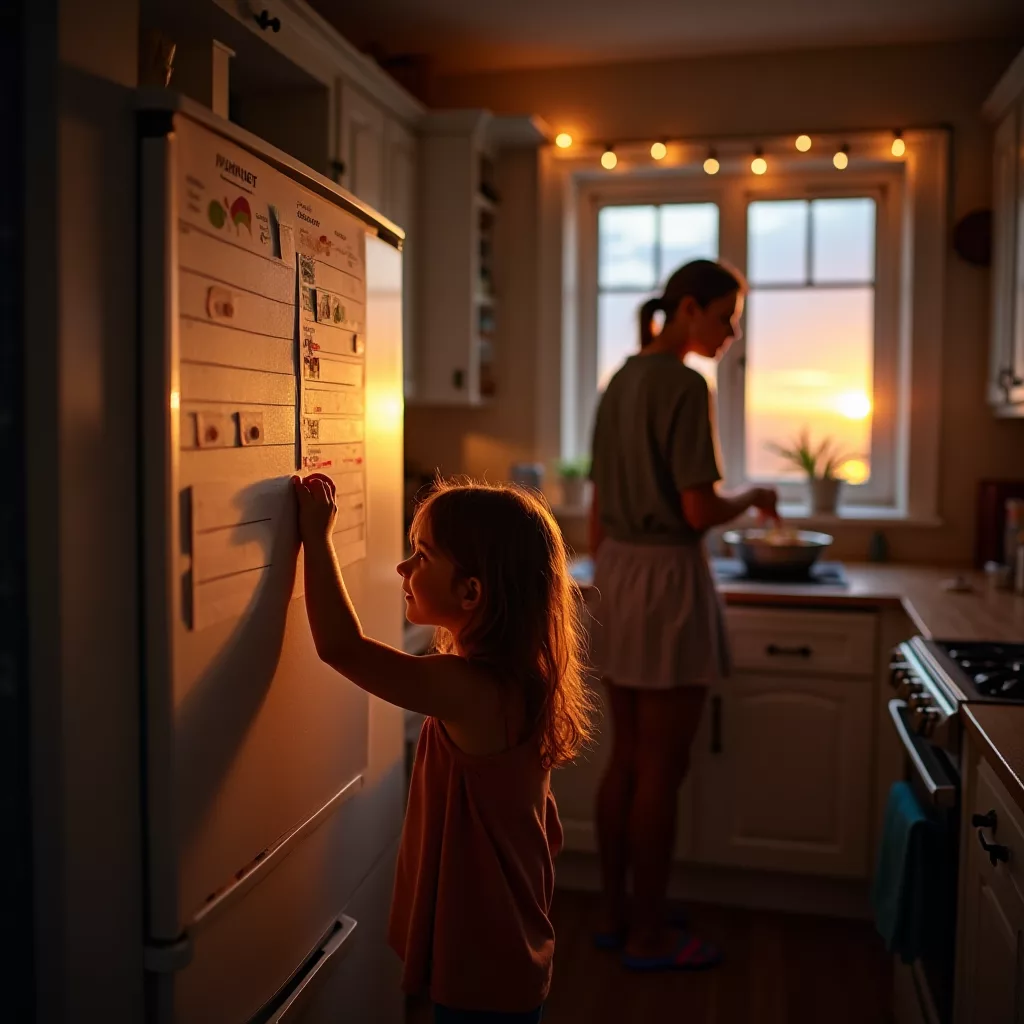
Hang your planner where your child naturally transitions — by the entryway, kitchen, or play area.
🕰️ Keep It Short
Limit your planner to 5–7 visual steps. Too many icons create overwhelm.
🧡 Keep It Flexible
Some days will go off-track — that’s okay. The planner is a guide, not a rulebook.
🌿 Use Positive Reinforcement
Praise the process (“You followed your plan so well!”) rather than the outcome.
💫 Refresh Each Season
Swap images to match new rhythms: summer play, winter cozy crafts, school term vs. holidays.
🧺 Step 5: Practical Options for Busy Families
Because real life is messy, here are simple swaps to keep your afternoons running smoothly:
| Situation | Try This |
|---|---|
| Kids come home starving | Keep a “ready snack basket” near the table — fruit, popcorn, or cheese cubes. |
| Siblings argue | Separate their first 10 minutes after school — one in the garden, one with coloring. |
| Homework resistance | Set a 10-minute timer, do one page together, then break for play. |
| No time for big activities | Combine steps: snack + chat becomes the reconnection. |
| You’re tired too | Use the planner to guide the kids without you talking — point instead of prompting. |
🌈 Step 6: Add Choice, Not Chaos
Visual planners don’t have to be rigid. You can build choice cards that slot into the same structure:
- “Snack Choices” — apple, crackers, smoothie.
- “Play Choices” — Lego, coloring, dance, outside.
- “Calm Choices” — puzzles, story, drawing.
By offering two or three visuals per step, you let children feel empowered while still moving through a predictable flow.
🧩 Step 7: Turn It into a Playful Ritual
Kids love routine when it feels like a game.
Try:
- Let them move a magnet or sticker each time they finish a step.
- End the day by giving a “Flow Star” sticker to celebrate smooth transitions.
- Create a weekly tracker sheet — kids color a star each day they followed their plan.
Visual planners can become part of your evening reflection:
“What part of your plan did you like best today?”
🧘♀️ Step 8: When Things Don’t Go Smoothly
Even with the best visuals, some afternoons will unravel — meltdowns, skipped steps, unplanned cuddles.
When that happens:
- Pause and breathe — your calm resets theirs.
- Re-connect before redirecting.
- Review the plan together later, not mid-meltdown. Ask, “Did our plan work for you today? What should we change?”
The goal isn’t perfection. It’s teaching children that routines can bend without breaking.
💡 Example: A Calm Afternoon Flow
| Time | Visual Step | Purpose |
|---|---|---|
| 3:30 PM | Snack + Chat | Reconnect, decompress |
| 3:45 PM | Unpack + Tidy | Reset environment |
| 4:00 PM | Play / Creative Time | Regain autonomy |
| 4:30 PM | Homework / Reading | Short focus window |
| 5:00 PM | Screen / Chill (20 min) | Rest time |
| 5:30 PM | Dinner Prep + Help | Contribution moment |
| 6:00 PM | Family Dinner + Wind-Down | Connection again |
Visualize it with icons and stick it at child’s eye level.
The Bigger Picture
When we create rhythms our kids can see and follow, we give them more than order — we give them confidence.
Visual planners teach:
- I can manage my time.
- I know what’s next.
- I can do this on my own.
They’re small steps toward emotional regulation, self-motivation, and independence — the kind of life skills that start with a sticker chart and grow into lifelong habits.
And for us parents, they offer something just as precious: fewer decisions, fewer power struggles, and more room for connection.
✨ Free Printable Coming Soon
Spoon & Sky is creating a Printable After-School Visual Planner Pack — complete with:
- Mix-and-match routine cards
- Re-connect activity ideas
- Editable blank templates
- Gentle color palette (calm pastels + cheerful icons)
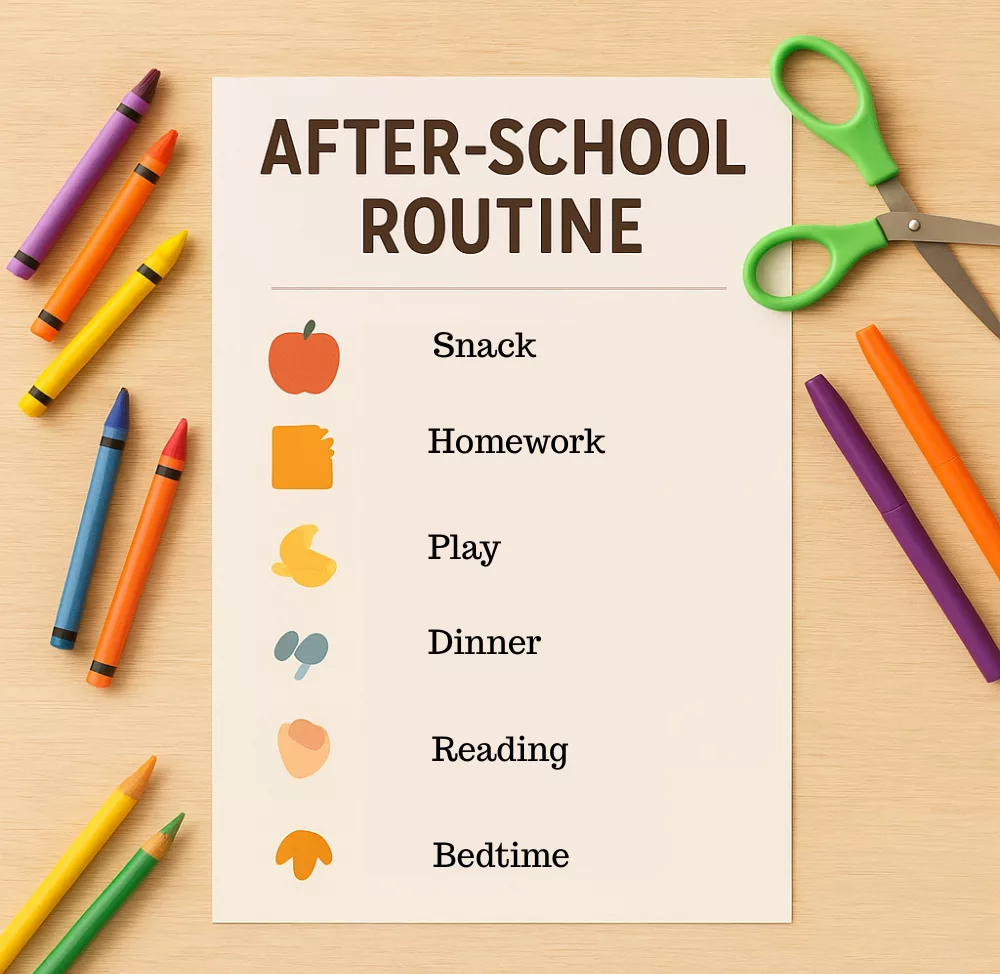
You’ll be able to download it directly from the blog or receive it in your inbox when you join the newsletter. In the meantime click on the image above for an awesome quick activity or have a look at the checklist below to give you a starting point.
❤️ Final Thoughts
There’s no perfect way to manage after-school chaos — but there is a gentler way.
A visual planner gives your kids the structure they crave and gives you back the calm you need.
It turns rush hour into flow hour.
It’s parenting made visual, simple, and just a little bit magical.
With markers on the table and joy in the mess,
Lily Luz ✨
Spoon & Sky Studios – Simple Tools for Joyful Structure


✨ Get Your Free Printable ✨
Looking for a simple way to bring a little more calm, structure, or creativity into your day?
Enter your email below and get instant access to your free printable from Spoon & Sky — made to spark joy, imagination, and gentle rhythms at home. 🌿
We’ll send your printable and a few kind, helpful ideas to your inbox. No spam — just calm, creative family tools.
Leave a Reply